Orbit
Lead UI Design
Visual Design
UX Design
A centralized event-discovery app with personalized recommendations and social features.
Introduction
Orbit is an event discovery platform for Vancouverites who miss local events due to scattered information. Originally focused on community building as "Communeo", the project shifted focus after primary research revealed fragmented information was the core problem users faced.
I led the conceptualization and design efforts for Orbit, along with leading a user interview, distributing the survey poster, and presenting for stakeholders along with my fellow student designers.
Timeline
13 weeks
Role
Lead UI Design
Contributors
Product Manager
UX Designer
Problem
Vancouverites struggle to discover local events due to fragmented information, causing them to miss activities they’d want to attend.
After the first round of primary research, we switched gears and focused on solving the event discovery timing crisis over reducing solo attendance anxiety.
Research
Let's start with the competitors.
Our competitive analysis revealed that while platforms like Eventbrite, Meetup, and Luma excel in specific niches, none effectively serve casual users seeking timely local event discovery.
A feature comparison across nine key features showed Meetup performed best with 6 out of 9 features rated as "Good", but no existing platform offers the comprehensive solution we aim to provide.
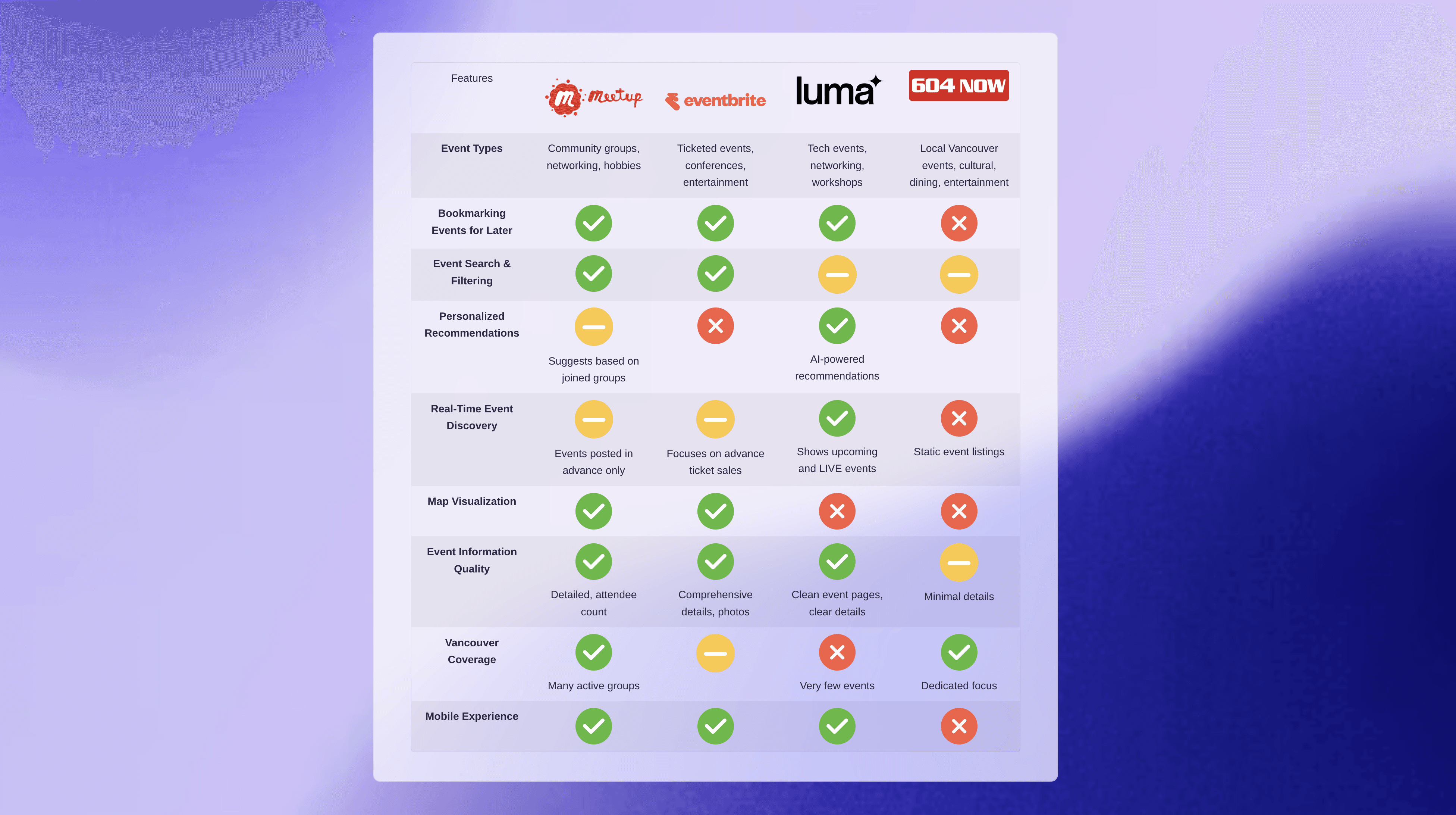
Features analysis table
What is people's experience?
We conducted six user interviews with participants aged 23-36, revealing a critical "event discovery timing crisis" where users consistently missed out on events because they found out too late.
Two surveys with 40 total responses validated this finding:
81%
Don't know they exist
76%
Find out too late
75%
Struggle with scattered information
While our sample size was limited and the mid-project pivot prevented a second round of interviews, the consistency of findings across all research methods confirmed that solving fragmented event discovery was the right path forward.
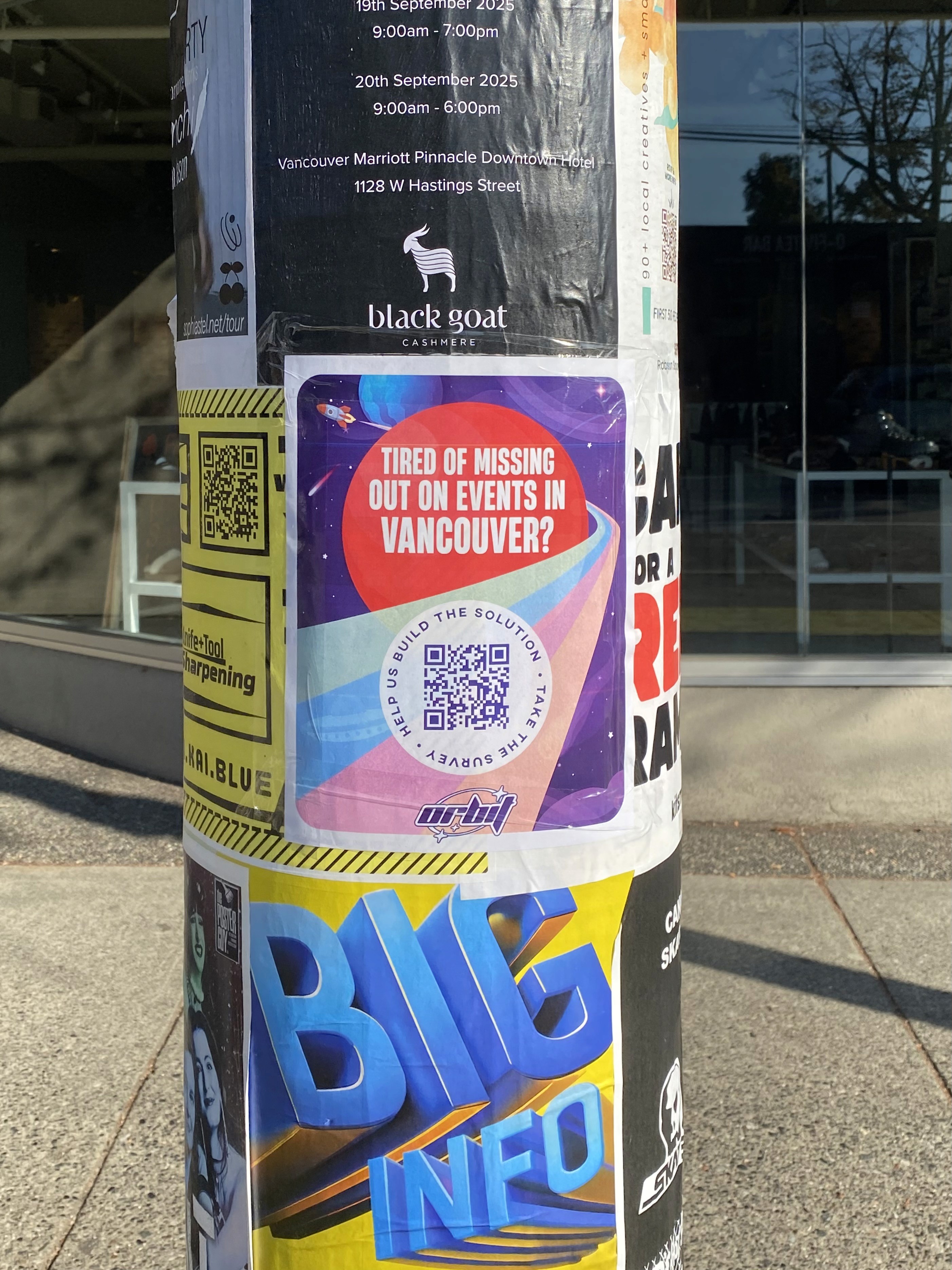
My poster design I put up around Vancouver.
Design Process
So, who are we designing for?
With insights from our research, we began designing by crafting a persona for event attendees, prioritizing this over a host persona due to time constraints.
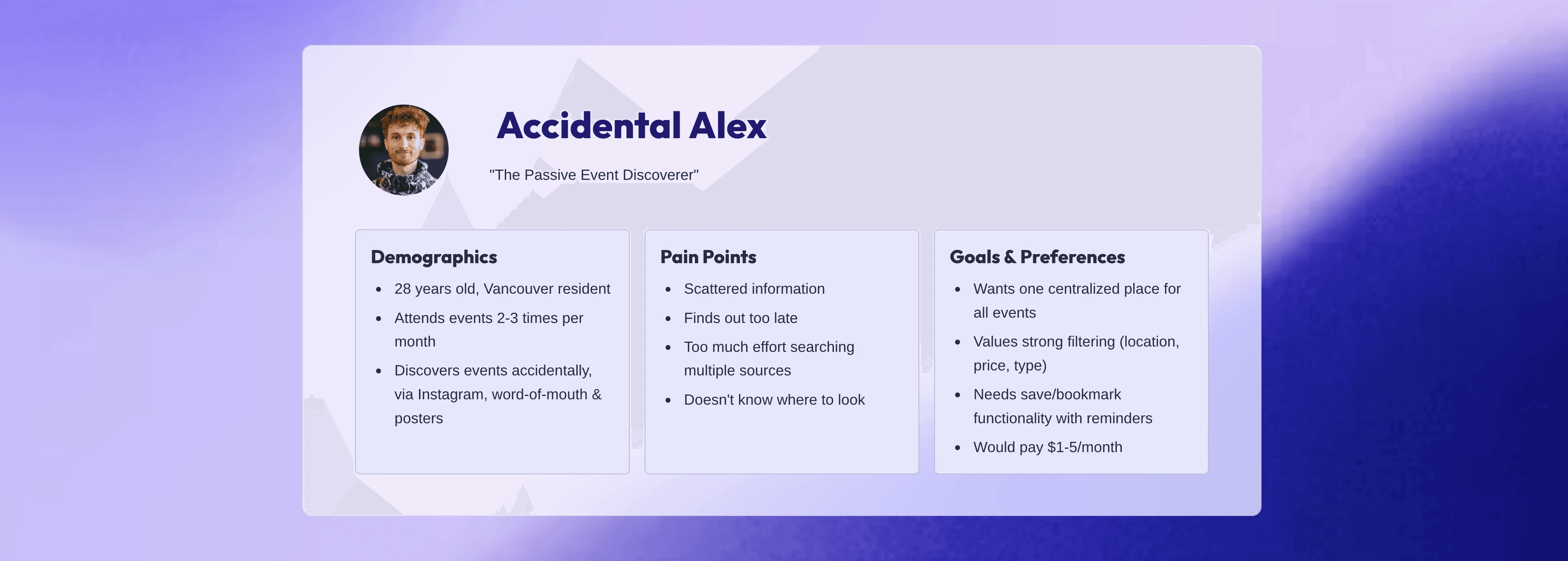
User persona
How can we solve the problem?
Our persona's user journey map revealed critical friction points during discovery and evaluation, identifying opportunities like real-time notifications, centralized filtering, and clearer event details.
With a clear understanding of our user's pain points, we reframed the problem as an opportunity to guide our ideation:
"How might we make it easier for Vancouverites to discover local events by centralizing fragmented information across multiple platforms?"
Determining the core tasks.
To understand motivations behind event discovery, we identified three core jobs users are trying to accomplish:
① Discover events before they sell out.
② See comprehensive listings in one place.
③ Easily find events at smaller venues to support Vancouver's creative community.
Based on these jobs, I designed user flows for four core tasks:
① Sign in.
② Save an event.
③ Find an event through the live map.
④ Search for a venue.
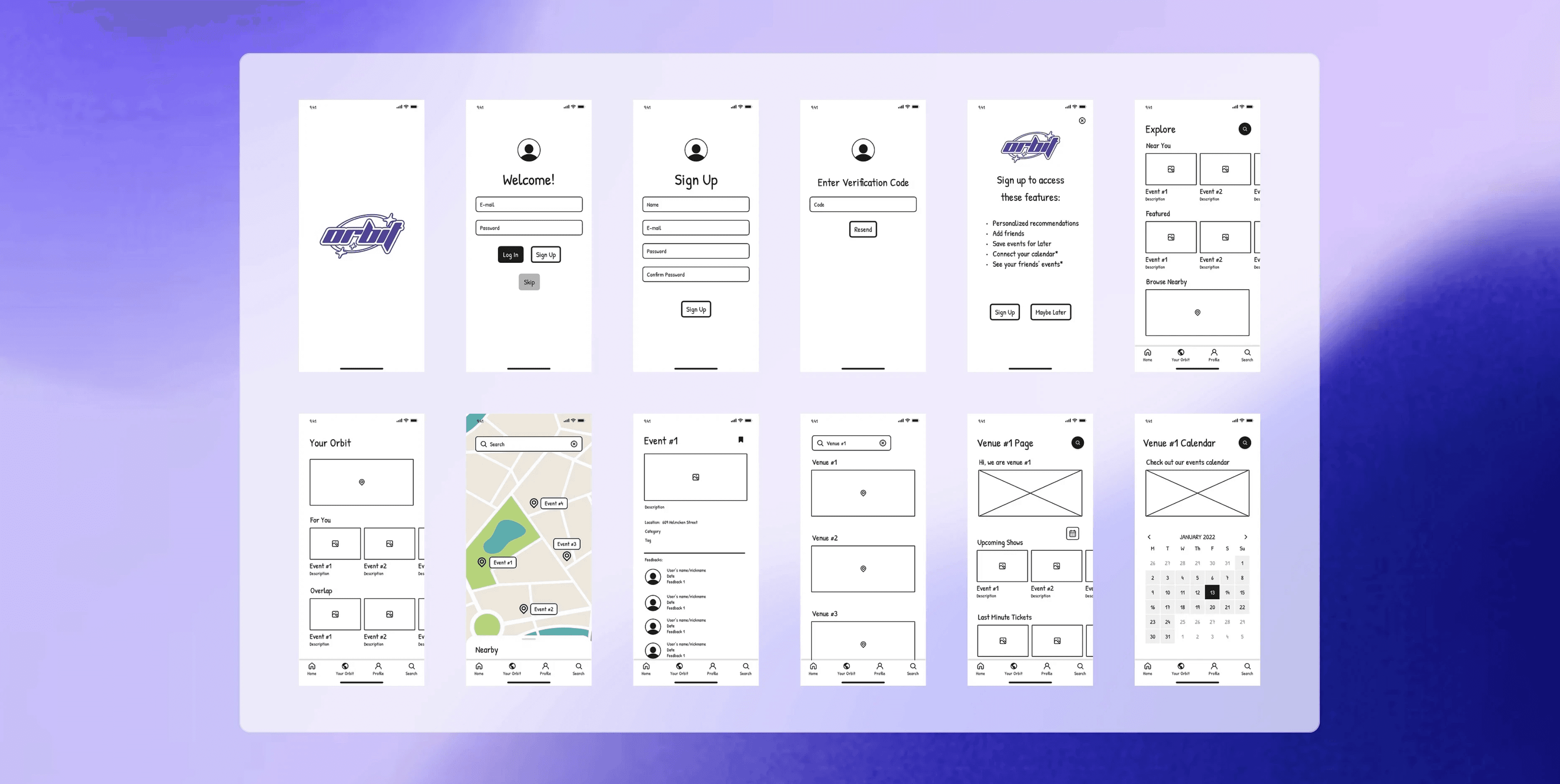
Mid-fidelity wireframes
Design Solutions
Testing, iterating.
Due to time constraints, we started wireframing while conducting user tests, using both low and mid-fidelity screens for testing.
Users found the verification email cumbersome, navigation hierarchy unclear and labels like "Overlap" confusing, though they appreciated the map feature and requested searchable filters and a "Who's going?" feature.
This iterative process allowed us to establish visual hierarchy, optimal spacing, and content presentation while incorporating usability insights into our high-fidelity design.
Final design.
Before creating high-fidelity wireframes, we established our design system with the "Teachers" typeface for legibility and a space-inspired color palette of Blueberry, Lavender, Violet and Sunflower yellow.
I redesigned our logo for a sleeker aesthetic and created custom icons for the tab bar and key features.
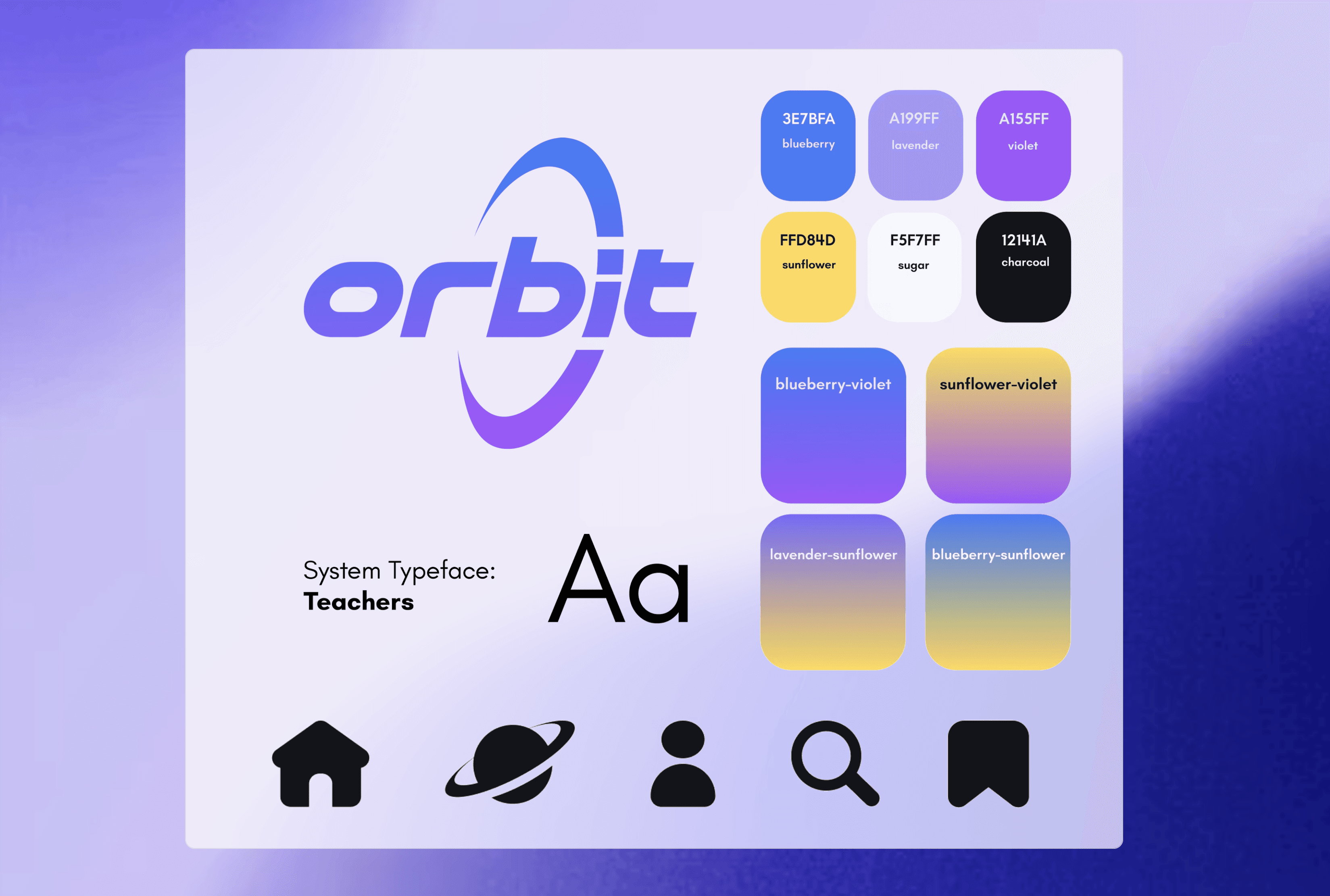
Design system
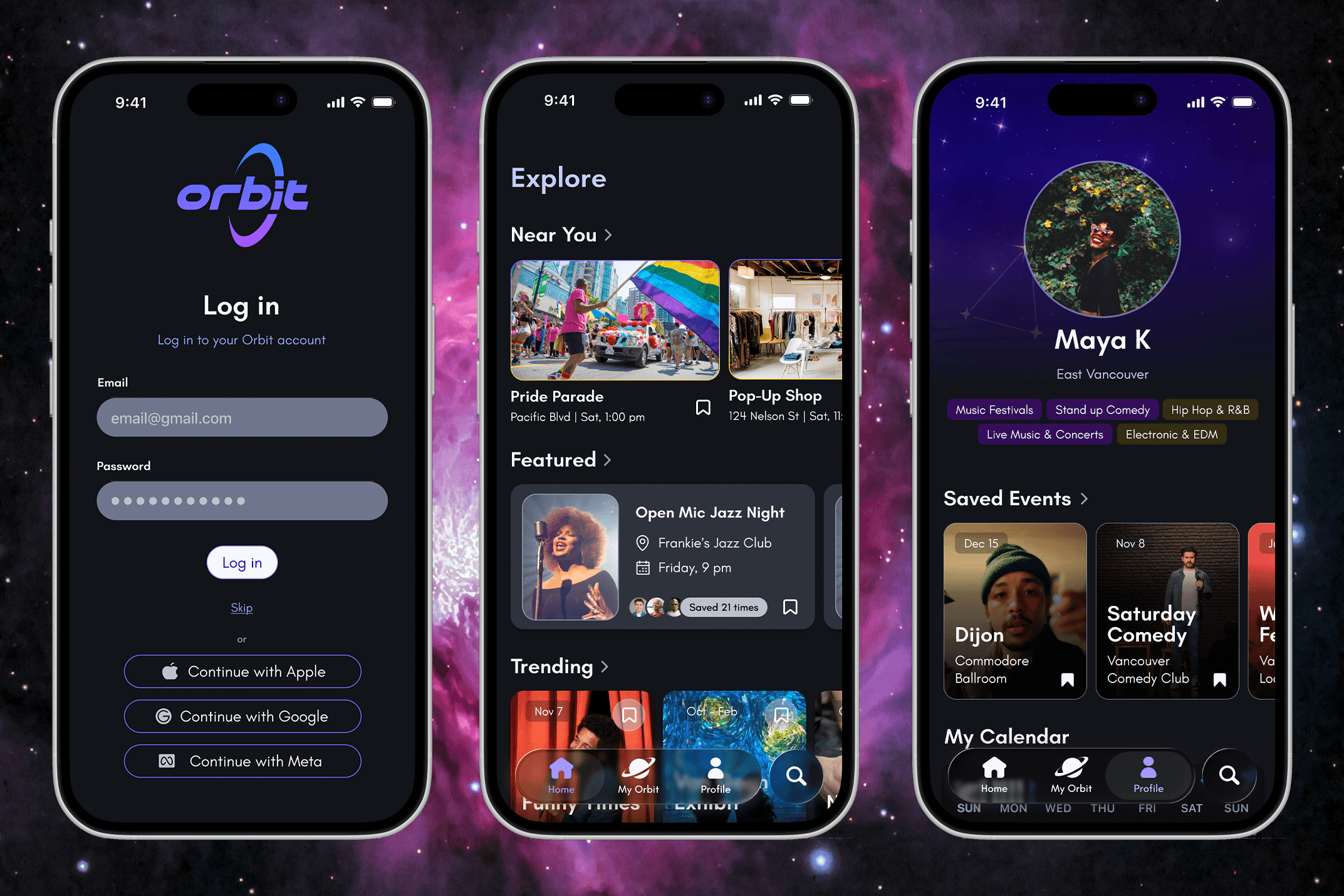
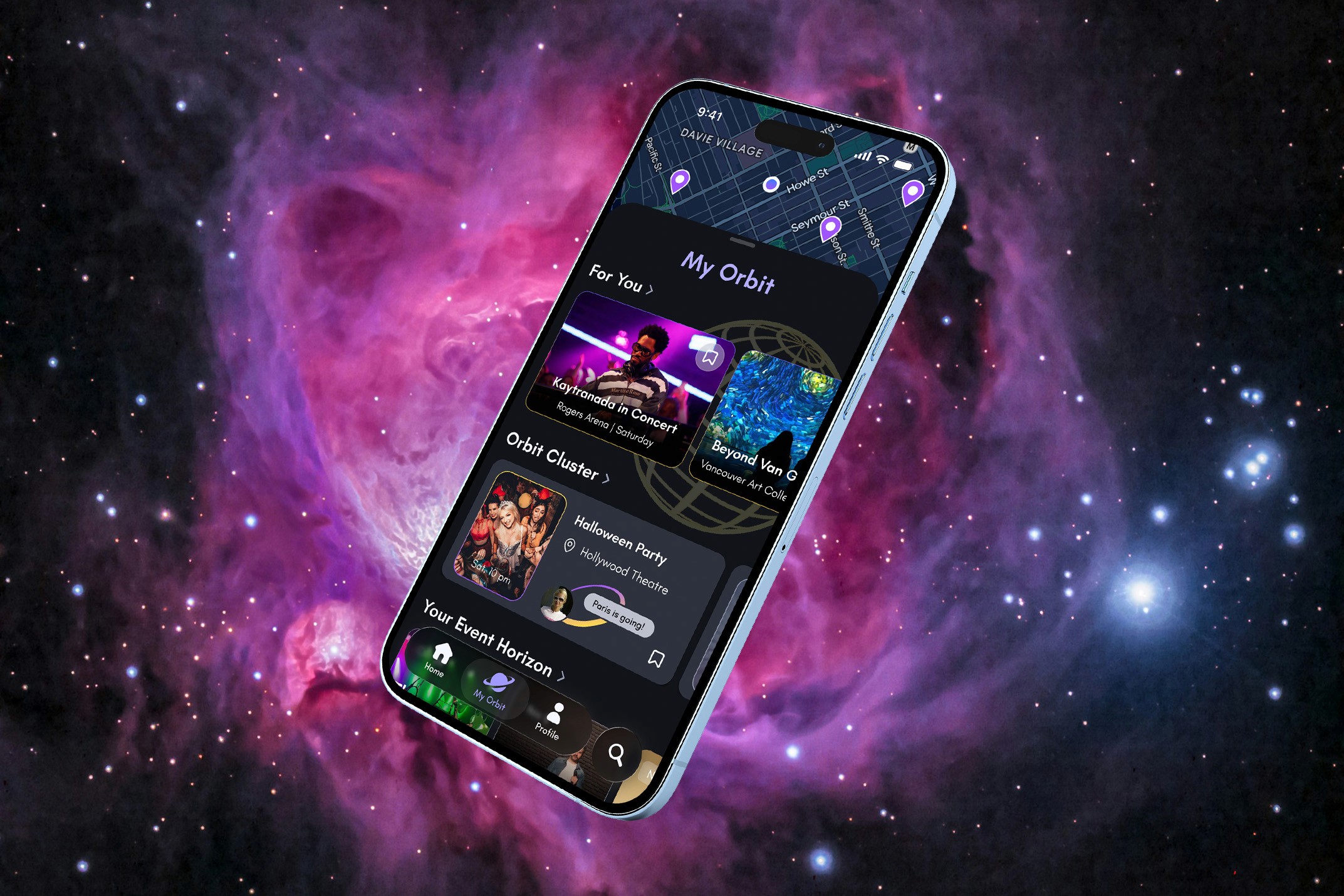
Finally, we created a fully interactive high-fidelity prototype that demonstrates the complete user journey from sign-in through discovery, personalized recommendations, saving events and filtered searching.Our space-inspired aesthetic creates a distinctive, modern experience while maintaining clear visual hierarchy and intuitive navigation.
Every interaction, from the real-time map to prominently featuring saved events on the profile, was designed to solve specific pain points identified in our research, delivering centralized, timely event information in a cohesive interface.